Pages
Showing posts with label Gibson Finlay. Show all posts
Saturday, March 26, 2016
Souvenir Saturday: Gibson
Finlay Gibson, 1841-1924, married Annie Bell 1881 Stevenston, Ayrshire, Scotland. Finlay was born in St George's, in the London district called Borough. He lies buried at New Street Cemetery, Stevenston.
He and Annie had the following children:
Annie, Catherine, Mary, Margaret and William Finlay who died in 1911 aged 22.
His military service record reveals:
448 Pte Finlay Gibson Discharged 22 June 1880. In Service Corps (15th Hussars). Chelsea Pension Number 81207a. Served India, Afghanistan. Born St Georges; East London. Age at discharge 39. Height 5'6". Hair Grey. Eyes Brown. Intended place of residence: Stevenston Ayrshire. Civilian occupation: Parasol Maker.
Medal Entitlement: Afghan Medal (below)
Sunday, October 19, 2014
Tracing a Military Man 2
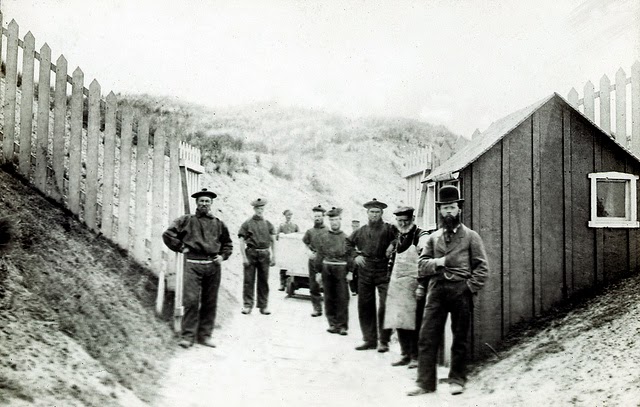
Finlay Gibson is at various dates during his career at the explosives factory described as ‘searcher’, ‘cartridge foreman’ and ‘gatekeeper’. A remarkable photograph shows the very gate where Finlay would have been positioned as gatekeeper.
Fascinating as I found his years at Nobel’s, the mystery was what he had been up to before that. How had Finlay had ended up in an obscure spot in Ayrshire, because his death certificate revealed he had been born in England. Several vital details were provided by this record. These in turn led to finding that long before his Stevenston phase he had been in the British Army.

Born in the parish of St George’s East, in the district known as Borough, London, in 1841 to William Gibson and Ann Morgan Jenkins, Finlay was a parasol maker by trade. He had at least two siblings, Margaret and William jnr.
How long Finlay practised his civilian occupation is not known, but the proceeds from parasol making were probably limited. For hundreds of young men in Victorian England, the army provided a reasonable alternative to poor living conditions in civvy street. William Gibson snr. was a soldier, and in due course both his sons would march in his footsteps, though neither very willingly - particularly the younger - judging from their army documents.
William jnr, joined, as Private No. 1265, the 2nd battalion of the 4th Regiment of Foot (the Buffs). He would turn out to be, so to speak, a loose cannon. More about William and his colourful career in due course.
Finlay went into the Army Service Corps, 15th Hussars, as Private No. 448, and served in colonial wars in India and Afghanistan. On 22 June 1880, he was discharged at the age of 39. His army records describe him as 5’6” tall, hair grey and eyes brown.
From service records it was possible to build up a fairly comprehensive picture of Finlay’s career. There were clues as to his later life when his army days were over.
These together with Census records offered a wealth of information as well as a welcome explanation of Finlay’s popping up so unexpectedly in a small Ayrshire town by 1881, as he entered his forties.
The loading gates at the Nobel Factory in Ardeer circa 1900.
The employees are all wearing Tam O’Shanters except of course for the foreman with his bowler hat. www.flickr.com/photos/nayesterdays/5567523975/ North Ayrshire Council photo collection/
Fascinating as I found his years at Nobel’s, the mystery was what he had been up to before that. How had Finlay had ended up in an obscure spot in Ayrshire, because his death certificate revealed he had been born in England. Several vital details were provided by this record. These in turn led to finding that long before his Stevenston phase he had been in the British Army.

Born in the parish of St George’s East, in the district known as Borough, London, in 1841 to William Gibson and Ann Morgan Jenkins, Finlay was a parasol maker by trade. He had at least two siblings, Margaret and William jnr.
How long Finlay practised his civilian occupation is not known, but the proceeds from parasol making were probably limited. For hundreds of young men in Victorian England, the army provided a reasonable alternative to poor living conditions in civvy street. William Gibson snr. was a soldier, and in due course both his sons would march in his footsteps, though neither very willingly - particularly the younger - judging from their army documents.
William jnr, joined, as Private No. 1265, the 2nd battalion of the 4th Regiment of Foot (the Buffs). He would turn out to be, so to speak, a loose cannon. More about William and his colourful career in due course.
![]() |
| Finlay Gibson's Army Discharge papers give his civilian occupation as parasol maker
To be continued
|
From service records it was possible to build up a fairly comprehensive picture of Finlay’s career. There were clues as to his later life when his army days were over.
These together with Census records offered a wealth of information as well as a welcome explanation of Finlay’s popping up so unexpectedly in a small Ayrshire town by 1881, as he entered his forties.
Subscribe to:
Posts (Atom)