
Friday, November 4, 2016


Thursday, October 20, 2016
The Ghosts of Kangaroo Island
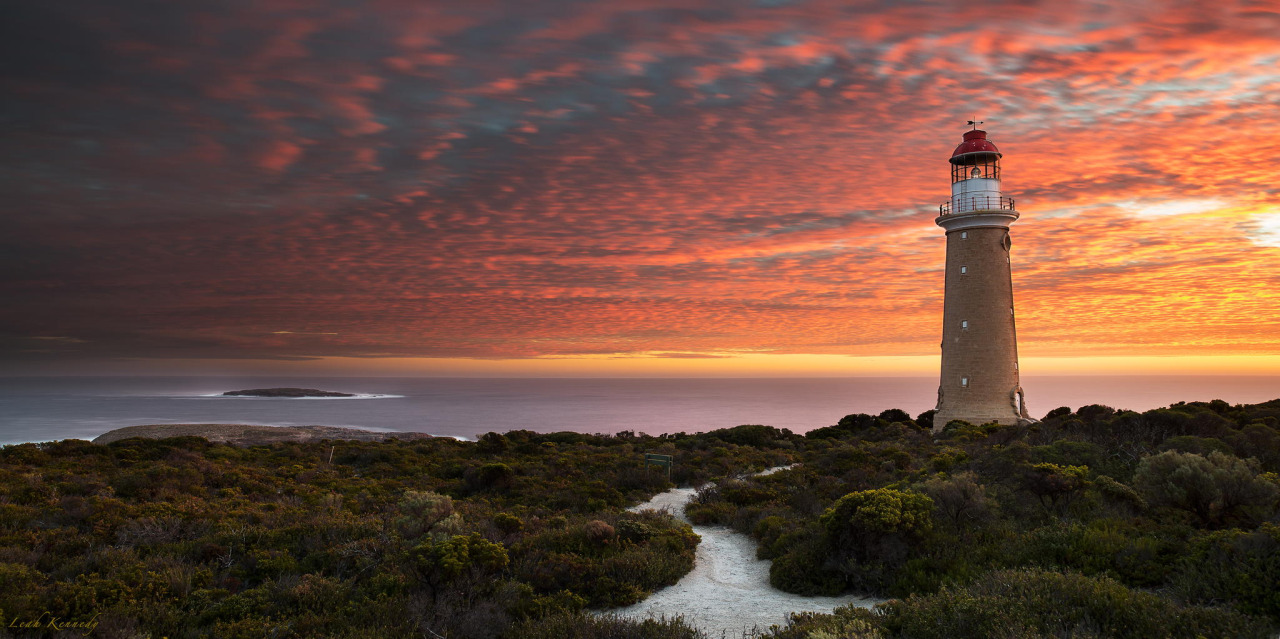
Kangaroo Island sits 110 kilometres south of Adelaide South Australia
and has four lighthouses, which have been essential to safe passage of ships in
and around the island for more than 160 years, Cape Willoughby (1852), Cape
Borda (1858), Cape du Couedic (1906), and Cape St Albans (1908.) It is well known and well documented that the waters surrounding Kangaroo Island
In the early days the island’s keepers and their families were
completely isolated and for a long time there were no roads connecting the
lighthouses to the rest of the island. At
Cape Borda
It would seem some of the long gone souls of sailors, lighthouses
keepers and their families still remain on Kangaroo Island Cape Borda
The visitor’s book at Cape du Couedic also reports strange occurrences
of unexplained sounds, lights coming from within the cottages and old man
visiting. Perhaps the old man is the
Lighthouse Keeper that has said to haunt Cape du Couedic? It is clear from the
visitors that they are never quite alone and it is said if you are afraid of
ghosts don’t read the Lighthouse visitors book!
The author of Favourite Haunts ‘A Sea of Ghosts on Kangaroo Island
‘I was completely restless the entire first evening of our stay. Inside
the cottage, it felt as though we were constantly watched. I know it sounds
terribly cliché, but this sensation was so intense that it made the hairs on
the back of my neck remain permanently raised, as if something was
hovering just behind me, deliberately staying out of
sight. Whenever I looked up, or turned around, or walked out of one
room and into another, I could not escape the feeling that at any moment I
would find a stranger staring at me from within the shadows.
Then on the first night, not long after I had dozed off, I was
woken suddenly by what I thought was someone whispering in my ear: "My
name is John..."’ And in the early hours of
that last morning, before the sun had even peaked above the horizon, I woke
from my slumber, unmoving, but fully awake and alert. Outside it was perfectly still,
not even the sound of a bird could be heard. And then, just as it had been
reported countless times in the visitor books, there came the sound of
movement from the other end of the corridor outside the bedroom: A shuffling,
thumping and tapping, the distinct sounds of someone pulling on boots,
followed by footsteps proceeding down the hallway to the front door, first
becoming louder at their approach, before gently fading away.
The tales of the ghosts of Cape du Couedic do not reveal, nor even hazard
a guess at the identity of the spirit whose footsteps are so regularly heard
making their way down the hallway in the cottage. I like to think that it is
one of the old assistant light-keepers making his early-morning check
of the lighthouse.
Whilst it's easy to make assumptions, it's more difficult
to confirm if any of the assistant Light-keeper's stationed at Cape du
Couedic, and resident of the same cottage, were actually named John. It'd be a
neat coincidence if there was, though.’
Now all that is left for us to find out is if Cape St Albans
Tuesday, October 18, 2016
Did your British military ancestor die in the Boer War?

For all family historians seeking British ancestors who died in the Anglo-Boer War,
Brian Kaighin says:
I have a database of all known British military personnel who died during the Boer War and anyone looking for info can contact me on kaigs@mweb.co.za
Friday, October 14, 2016
Gold mining ancestors in South Africa
 |
Off to the Barberton goldfields. Note De Kaap painted on side of wagon at right. A motley throng in a variety of costume. The dog is going along for the ride. Because miners were nomadic, moving from one field to another, it is usually difficult to trace a mining ancestor unless he generated a public record e.g. committed a crime, put in a compensation claim etc. There was no insurance and little medical care available. Barberton is a town in the Mpumalanga province of South Africa, which has its origin in the 1880s gold rush in the region. It is situated in the De Kaap Valley and is fringed by the Makhonjwa Mountains. |
In 1881 gold in the Barberton area was discovered by Tom McLachlan who found alluvial gold at Jamestown. However, due to the location (the hot lowveld region was rife with malaria) no-one wanted to go there until Auguste Roberts ("French Bob") discovered gold in Concession Creek on 20 June 1883. This discovery resulted in a gold rush to the area.
On 21 June 1884, Graham Barber wrote a letter to the State Secretary to inform him that he and his two cousins Fred and Harry discovered payable gold on state land where the Umvoti Creek entered the De Kaap valley. The State Secretary then asked the Magistrate in Lydenburg to investigate the matter and for David Wilson, the Gold Commissioner, to submit a report. Wilson investigated on 24 July 1884 and declared the township of Barberton.
The town was named after Graham Hoare Barber (1835-1888) who discovered a rich gold-bearing reef there in 1884. Barberton became a municipality in 1904.
At first it was just a simple mining camp but grew when Edwin Bray, a prospector discovered gold in the hills above Barberton in 1885 and with 14 partners started the Sheba Reef Gold Mining Company.
Large amounts of money flowed into Barberton and the first Stock Exchange to operate in the then Transvaal opened its doors. More buildings were erected, billiard saloons and music halls established. The Criterion and Royal Standard hotels were opened. In 1896, Barberton was connected by rail to the Netherlands-South African Railway Company (NZASM)'s Oosterlijn (Pretoria to Lourenço Marques) through a specifically constructed side line running from Kaapmuiden to Barberton.
Barberton flourished for only a brief period and soon the inhabitants began to move away to the newly discovered gold fields on the Reef.
Sunday, October 9, 2016
Ghostly Ancestors? 2 Bustard Head Lighthouse
The curse of the
Bustard Head Lighthouse.
 |
Lighthouse Keeper M J Rooksley in front of the lighthouse and the original cottages, Bustard Head Lighthouse, Queensland 1902 |
Bustard Head
Lighthouse is located on the southeast tip of Bustard Head, a headland about 20
kilometres northwest of the town of 1770, Queensland.
Built in 1868 It is still active but bears the scars of a tragic past and a
disturbing history.
It had been a
difficult lighthouse to build and the town now known as 1770 was
out of the way and far from everything. Building materials had to be dragged
across two tidal creeks to the lighthouse site. Intended as a beacon of safety
on Queensland treacherous shores, the lighthouse construction was nonetheless
was marred by tragedy. A
workman was struck on the head and died whilst working on the remote
building. His passing was
followed by shipwrecks, a suicide, drownings, an abduction, a murder, and
several other freak deaths.
In
1887 Kate Gibson, the wife of the Bustard Head lighthouse keeper, disappeared.
Some days later her children made a gruesome discovery . Kate was lying in a
pool of dried blood, with an arm folded across her chest and a horrible, gaping
wound across her neck. Her husband Nils, who
returned from a trip to the northwest to learn of his wife’s disappearance,
realised one of his razors was missing from the family’s cottage. Days later, it
was found under a tree root at the site of the body, covered in
blood.
Her
death was ruled a suicide and she was buried on the Bustard Head grounds. There
is no lack of company for her in that graveyard. Few have lived at the
lightstation, the site which includes the Lighthouse and keeper’s home, but a
disturbingly high number of people have died there.
Just
two years after Kate's death, tragedy struck the Gibson family and the
lighthouse once more. Nils, his 20-year-old
daughter Mary, assistant Lightkeeper John Wilkinson, his wife Elizabeth and a
repairman named Alfred Power set off from Bustard Head on a sailboat. They
didn’t make it far.
As the boat powered 450m clear of the shore, it capsized, throwing everyone into
the water. Alfred, Elizabeth and Mary all drowned. Nils, who managed to make it
back to land, never found his daughter’s body.
In
1897, Milly Waye, born at the Lighthouse, never had a chance to leave it, a year
later she was scalded with boiling water by accident. The infant suffered
“excruciating pain” for nine hours before she finally
died. In 1912 tragedy struck again,
this time in the form of an unsolved crime. Edith the daughter of the lighthouse
keeper was abducted whilst returning home and the man with her shot.Several weeks after Edith was
abducted, another of the light keeper’s daughters, 21-year-old Ethel, died after
suffering an epileptic fit.
Nils
Gibson died from cirrhosis of the liver six years after his daughter Mary
drowned and another infant, seven-month-old Henry Phillips, died from
“constitutional weakness.”
Wednesday, October 5, 2016
Ghostly ancestors?

Photo of the Pine
Islet Lighthouse before being relocated to the Mackay Marina in 1985 and restored to full
working condition.
Mackay is 971 kilometres north of Brisbane
In 1927 the authorities decided to build a new Lighthouse Keeper’s
cottage on the island and the only available flat land was a grave site. The headstone
identified the grave as belonging to Dorethea McKay, who died in 1895, the wife
of a Lighthouse Keeper. Dorethea’s body was exhumed and reburied some distance
away and the new cottage was built on that site.
Dorethea was obviously not going to take that lying down. Soon
mysterious footsteps and faint mutterings were heard. The Lightkeeper would go
to the door in answer to a knock and no one would be there.
The ghost’s visits continued until the 1980s when the lighthouse was
automated and the last time anyone heard from Dorethea was just before the last Lighthouse Keeper departed. There was no knock on the door this time, just
footsteps through the cottage and into the lounge, stopping above her original
grave.
The Lighthouse Keepers hoped that Dorethea was satisfied she would be
left in peace and had found her way back to her original resting place.
Acknowedgement:
Suzanne-Jo Leff Patterson
 |
Pine Islet lighthouse relocated to Mackay Marina |
Tuesday, October 4, 2016
Natal First public auction of Sugar 1855
 |
From IIIustrated London News 23 June 1855 The auctioneer was Robert Acutt. |
Monday, October 3, 2016
Family Tree Researcher
FAMILY TREE RESEARCHER
I met a friend the other day for weeks I had not seen,
I said “I have
not seen you much, wherever have you been?”
He said “I’ve been away from here back to my own birthplace,”
I’ve
been back there because my family tree I wish to trace.”
He then went on to tell me things about his kith and
kin,
And how he was related to the present sovereign.
He had a well known ancestor who was a famous writer.
Another was a general and a celebrated fighter.
His family were connected with the poet Percy Shelley
Who was distantly related to his great great Aunty
Nellie.
Explorers, sailors, scientists and bishops of renown.
His famous predecessors were well known throughout the
town.
I thought if he could do these things then maybe so
could I,
So I went down to the town hall to give the scheme a
try.
I soon found that a great great uncle Arthur had been
lynched,
Because of some small article they said that he had
pinched.
Another of my ancestors spent several months in jail
For wearing womens’ clothing when in fact he was a male.
One aunt had fixed her husband with a bullet in the
brain,
And another man cut up his wife and poured her down a
drain.
My great great uncle Henry was made to serve some time,
For doing what the papers called an anti-social crime.
I thought “This
interesting hobby really is no good for me,
We’re
such a lot of crooks and rogues it’s
getting plain to see.”
I packed up my researches then and threw away my notes
And took up writing poems and verse – like this one I just wrote!

Acknowledgement:
Frank Thorn
Sunday, October 2, 2016
Family group four generations
 |
Mrs. Bell (Catherine nee Ross R, my great great grandmother) Mrs. Gibson (my great grandmother Anne nee Bell L) Mrs. Dalzell (Mary Hamilton, 'Aunt Polly' back) and her baby son Jim Dalzell, taken at Hawthorn Cottage, Caledonian Road Stevenston, Ayrshire, Scotland. Catherine Thomson Ross b November 18,1834 Stevenston, d May 26, 1913 She married Samuel Bell of Chetwynd, Shropshire, England, b March 11,1833, d September 27,1874 Anne nee Bell married May 20, 1881 Finlay Gibson at Stevenston. Annie b February 14, 1859 at West, Hamilton, Wentworth, Ontario, Canada and d September 27, 1926, Winnipeg, Canada (buried Elmwood Cemetery, Winnipeg) |
Saturday, October 1, 2016
Souvenir Saturday: family group 1890s

Costume details: narrow lapels on male jackets, worn with stiff turn-down collar, no front crease on the trousers, short cropped hair, Norfolk suits for the boys, mother wears leg o' mutton sleeves and a jacket over her blouse - she hasn't gone for the bouffant hairstyle of the day.
Acknowledgement:
Eira Makepeace
Subscribe to:
Posts (Atom)