Showing posts with label Lord George Bentinck. Show all posts

Wednesday, June 27, 2018

Maritime adventures at Natal 2: Earl of Hardwicke and Lord George Bentinck


Captain William Bell had his fair share of shipwrecks to cope with during his time as Port Captain at Durban. 

The 1860s were particularly busy, as the volume of sail visiting the port increased and the difficulties of the harbour entrance, with varying depths of water over the Bar, had yet to be overcome. This was also the decade which saw the beginning of immigration of Indian labour, with ships sailing from Madras and other Indian ports to Natal carrying large numbers of migrants. 

Each shipwreck which occurred in the environs of the port would be the subject of an enquiry by the Harbour Board and the findings published in the local press. Bell and George Cato as well as the Lieutenant Governor and the Surveyor General sat on this Board and were closely involved in the harbour works proposed by John Milne, Harbour Engineer. 

The Earl of Hardwicke was a British wooden ship of 903 tons commanded by Captain Maddison. She was wrecked on the Back Beach at Durban on 26 Sept 1863 during a north east gale after a voyage from Madras with a cargo of Indian Immigrants. Fortunately no lives were lost. [Natal Mercury 4 December 1863]

There had been a similar incident on 3 January 1861 when the Lord George Bentinck another British barque of 592 tons, commanded by Captain George Case, was wrecked on the Back Beach in a north-easterly wind. She was carrying Indian immigrants and had sailed from Madras. [Natal Mercury 10 January 1861] 

The Adelaide was wrecked during a strong easterly gale on 8 Feb 1866. This ship was also carrying Indian immigrants. Several men were drowned in the incident.
[Natal Mercury 8 February 1866]
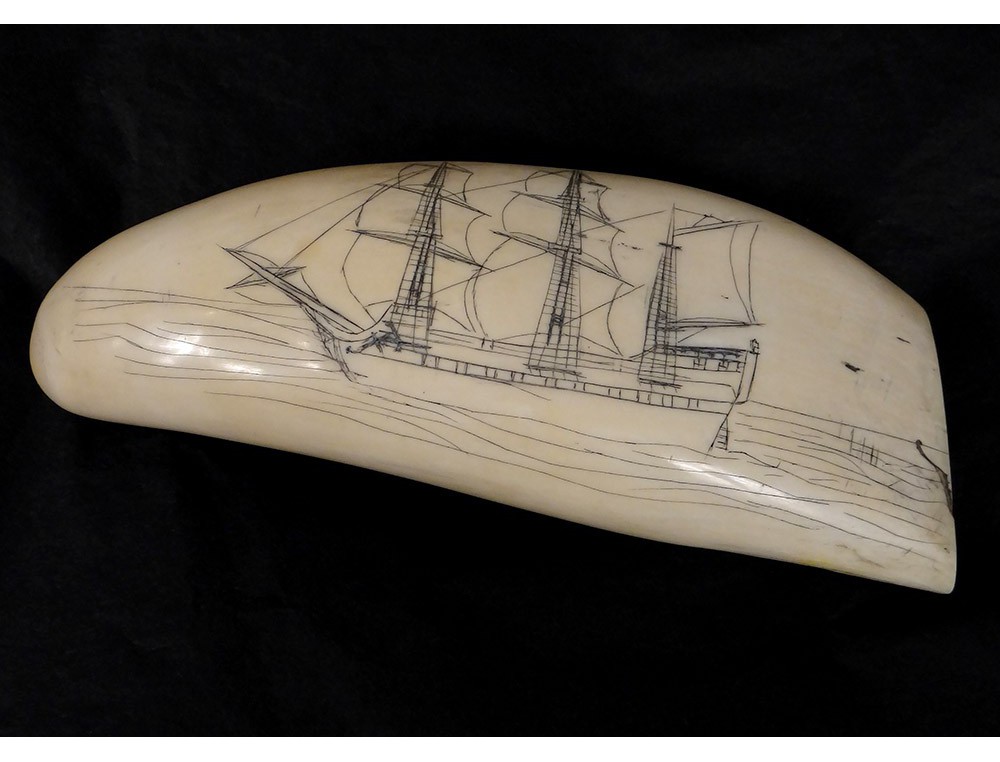


Image result for sailing ship engraving
Scrimshaw: Sailing vessel on whale ivory.


Monday, July 2, 2012

Indian Migrants to Natal 1860


The most significant event of the 1860s in the Colony was the arrival of a ship called the S.S. Truro on 16 November 1860, heralding a new era. The Truro, a wooden paddle steamer rigged with sail, brought 343  migrants from their homes in India, pioneers in a process which would continue until after the first decade of the 20th century and bring more than 150,000 people to the shores of Natal.

Social, economic and political effects would be far-reaching. These events and their consequences have generated a large body of literature to which there are regular additions and anyone reading this blog can do a Google search on the terms ‘indentured Indians’ or ‘Indian migrants Natal’ to pursue a study of the topic. The Indian diaspora was a global phenomenon and Natal’s involvement should be seen in that context, from an academic point of view.

If you’re a family historian, the focus changes. It becomes individualized: less anonymous, intensely personal. Descendants of the Indian migrants increasingly want to know about their ancestors and about their origins. Acquiring such information is not easy. More about that aspect in future posts.

Indian migrants at Natal
Meanwhile, we could try to imagine the leap of faith required by the migrants to leave everything that was familiar to them and embark on a long sea voyage towards an unknown country, where they would begin an indenture contract of five years.

The Truro was followed shortly by the Belvedere (quarantined in the roadstead due to cholera on board) and the Lord George Bentinck, bringing the total migrant arrivals in the year 1860 to nearly a thousand.

Passengers were taken off the vessels by lighter and delivered to barracks at the Point from where their employers would collect them. Their journey was far from over.